
"coffee cultivation basics"
4000 article(s) found

Basic knowledge of coffee planting techniques and matters needing attention of coffee trees
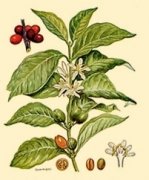
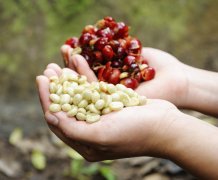
The origin of the coffee tree is Ethiopia in Africa. In botany, coffee trees belong to the evergreen trees of the subgenus Rubiaceae, and coffee beans, commonly known as coffee beans, are actually the seeds of the fruit of coffee trees. They are called coffee beans only because they are shaped like beans. Climate is the decisive factor for coffee cultivation. Coffee trees are only suitable for growing in the tropics or subtropics, so latitude 25 degrees south and north.

Basic information of coffee the small seed species of coffee encyclopedia is Coffea arabica
[scientific name] the small grain species is Coffea arabica L., the medium grain species is Coffea canephora, the large grain species is Coffea liberica, which is also called Arabian species, the medium seed species is also called Gaffra species, and the large grain species are also called Liberian species. There are two common species: Arabica and Robusta. Rubiaceae (Rubiaceae), coffee genus (Coffea) [domestic]

Basic information on coffee
[scientific name] the small grain species is Coffea arabica L., the medium grain species is Coffea canephora, the large grain species is Coffea liberica, which is also called Arabian species, the medium seed species is also called Gaffra species, and the large grain species are also called Liberian species. There are two common species: Arabica and Robusta. Rubiaceae (Rubiaceae), coffee genus (Coffea) [at home and abroad]
Basic knowledge of fine coffee the growth environment of small-grain coffee
Small grain coffee scientific name: Coffea arabica family genus: Rubiaceae coffee genus morphological characteristics: small trees or large shrubs, plant height 5 meters 8 meters. Base usually much branched, old branches gray-white. Nodes inflated, young branches glabrous. Leaves thinly leathery-ovate-lanceolate or lanceolate, apex long acuminate, base cuneate or slightly obtuse, entire or shallowly wavy, both surfaces glabrous. Cymes several clustered in leaf axils

Basic knowledge of fine coffee in coffee communication period chronology
Coffee spread to Arabia (eleventh century), Egypt, Syria. (13th century) Damascus (16th century) Europe (17th century) the first people to plan to grow and eat coffee were Arabs. At the beginning of the eleventh century, people in the Arab region boiled coffee into soup or dried it and then boiled it as stomach medicine. Because Muslim precepts are strict and alcohol is strictly forbidden, Muslims

The basic knowledge of Coffee planting
What is coffee? Coffee is the fruit of a Rubiaceae plant growing about 6000 feet above sea level, distributed on the world's narrow subtropical axis; coffee trees grow green all the year round and can grow up to 20 feet tall, and are generally controlled at 8 to 10 feet for easy harvest. It takes three to five years for the coffee tree to bear fruit. First of all, it produces small white flowers that resemble jasmine in shape and size.

Technical rules for cultivation of small seed Coffee basic knowledge of Coffee
1 scope this part stipulates the technical methods of small seed coffee garden selection, planning, reclamation, seeds, seedlings, planting, soil management and coffee tree management. This part is suitable for the cultivation of small seed coffee. 2 normative citation documents the provisions of the following documents become the provisions of this part through the citation of this section. For all dated reference documents, all subsequent revisions

The history of growing coffee based on the basic knowledge of fine coffee
In fact, the Arabs began to grow coffee in 525 BC, and chewing fried coffee beans became popular in the Arab region. In 890 AD, Arab merchants sold coffee beans to Yemen, and Yemenis made coffee beans into drinks for the first time. In the 15th century, coffee was introduced into Europe, Asia and soon into America. By the 18th century, tropical and subtropical regions around the world were widespread.

The origin and planting conditions of coffee trees basic knowledge of coffee
The origin of the coffee tree is Ethiopia in Africa. In botany, coffee trees belong to the evergreen trees of the subgenus Rubiaceae, and coffee beans, commonly known as coffee beans, are the seeds of the fruit of coffee trees, just because they are shaped like beans, so they are called coffee beans. Climate is the decisive factor for coffee cultivation. Coffee trees are only suitable for growing in the tropics or subtropics, so latitude 25 is south and north.
Basic knowledge of boutique coffee knowledge of fine coffee beans
There are about 60 species of coffee in the world, of which only 25 species are cultivated to make coffee, of which only 4 species are used as commercial coffee: large fruit coffee (Coffea liberica), medium fruit coffee (Coffea canephora), small fruit coffee (Coffea arabica) and high yield coffee (Coffea dewevrei). These are botanical names. Coffee in the world at present

Basic knowledge of Coffee
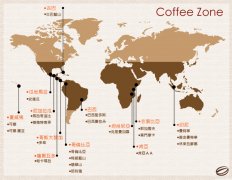
The best growing area for coffee is between 25 degrees north latitude and 30 degrees south latitude. This region includes the heartland of many countries and parts of South America, Colombia, Africa, India, Asia, the Middle East and Hawaii. At present, there are about 70 coffee-producing countries, most of which are located at an altitude of 300400 meters, and coffee trees are sometimes cultivated in highlands at an altitude of 20002500 meters.
Madagascar is basically the producer of Robbins coffee and a commercial bean producer.
Madagascar (Madagascar) is basically a producer of Robbins Coffee, but plans to increase the cultivation of Arabica beans. Since 1989, the coffee industry on the island has been privatized and many regulations have been lifted, with a total output of about 1 million bags a year. As Malagasy people like to drink coffee, the domestic consumption of coffee is very high. The country's Robbins
Madagascar is basically a producer of Robbins coffee and has increased the number of Arabica beans.
Madagascar (Madagascar) is basically a producer of Robbins Coffee, but plans to increase the cultivation of Arabica beans. Since 1989, the coffee industry on the island has been privatized and many regulations have been lifted, with a total output of about 1 million bags a year. As Malagasy people like to drink coffee, the domestic consumption of coffee is very high. The country's Robbins
Madagascar is basically the producer of Robbins coffee and a commercial bean producer.
Madagascar (Madagascar) is basically a producer of Robbins Coffee, but plans to increase the cultivation of Arabica beans. Since 1989, the coffee industry on the island has been privatized and many regulations have been lifted, with a total output of about 1 million bags a year. As Malagasy people like to drink coffee, the domestic consumption of coffee is very high. The country's Robbins

Basic knowledge of coffee growing
What is coffee? Coffee is the fruit of a Rubiaceae plant grown at altitudes of about 6,000 feet and distributed along narrow subtropical axes around the world; the coffee tree is green all year round and can grow up to 20 feet tall, usually controlled to 8 to 10 feet tall for easy harvesting.

The basic altitude of coffee planting technology is the most suitable for planting.
Coffee planting technology the origin of coffee trees is in Ethiopia, Africa. In botany, coffee trees belong to the evergreen trees of the subgenus Rubiaceae, and coffee beans, commonly known as coffee beans, are the seeds of the fruit of coffee trees, just because they are shaped like beans, so they are called coffee beans. Climate is the decisive factor for coffee cultivation. Coffee trees are only suitable for growing in the tropics or subtropics.

Coffee basics two coffee varieties of coffee beans
Linnaeus (Swedish naturalist) classifies coffee plants into the Rubiaceae family, such as gardenia. The great naturalist named it Coffea. Although wild plants can grow as high as 10-12 meters, the plantations are about 3 to 5 meters high, with the exception of Colombia, where tree species rarely exceed 2 meters. This makes farming and picking easier and more economical to cultivate. Leaves
Basic knowledge of Fine Coffee an overview of the history of Yemeni coffee
Coffee scientific name: Coffea arabica), also known as coffee tree, Arabica coffee, etc., is the national flower of Yemen. Before the 6th century in the park, Yemen was called Arab, so the coffee trees transported from them to other places were also called Arabian coffee trees. The name coffee comes from the Arabic Qahwah, which means plant drink. Later, the coffee spread all over the world, and it was picked.
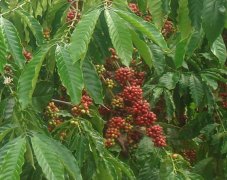
Basic knowledge of introduction to Coffee
The best growing area for coffee is between 25 degrees north latitude and 30 degrees south latitude. This region includes the heartland of many countries and parts of South America, Colombia, Africa, India, Asia, the Middle East and Hawaii. At present, there are about 70 coffee-producing countries, most of which are located at an altitude of 300400 meters, and coffee trees are sometimes cultivated in highlands at an altitude of 20002500 meters.

Basic knowledge of Harald coffee boutique coffee beans
Harald (Harar) is 1600 meters above sea level, and the Harald Heights in eastern Ethiopia is one of the highest elevation areas for human coffee cultivation (some even claim to be as high as 2000 Murray 2,700 meters). Across the Gulf of Aden, overlooking the two ports of Moka and Aden in Yemen. For centuries, Harald coffee farmers carried coffee beans down the mountain with camels, donkeys or carriages, risking being besieged by hyenas.